architecture

Tuesday, August 26, 2014

Today's archidose #779

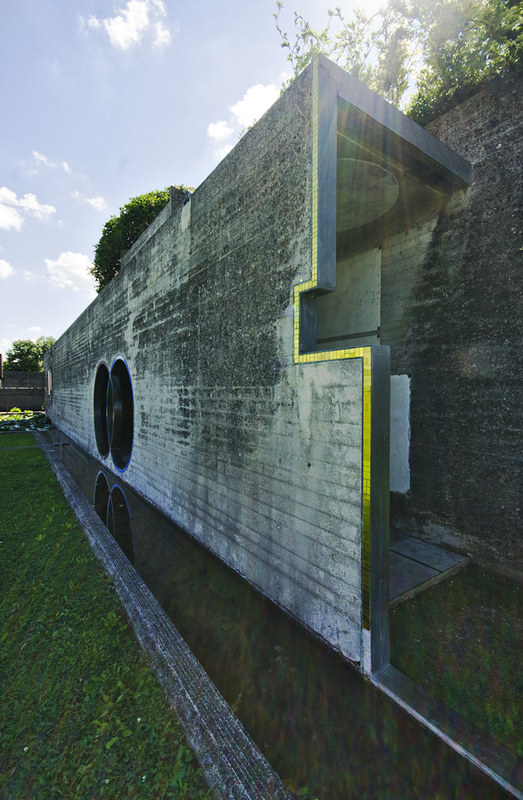
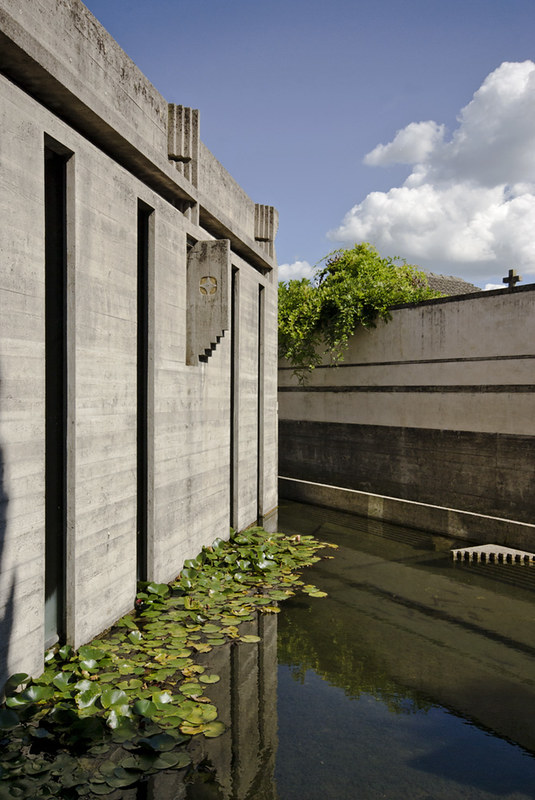
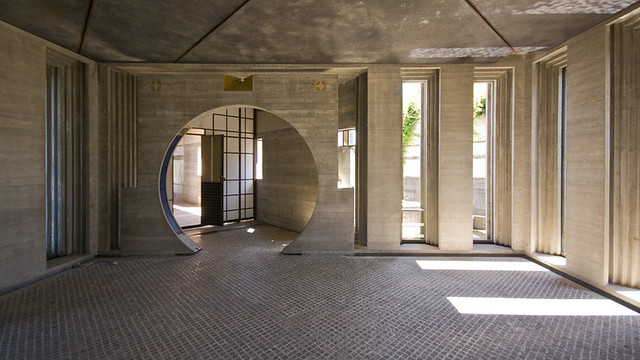
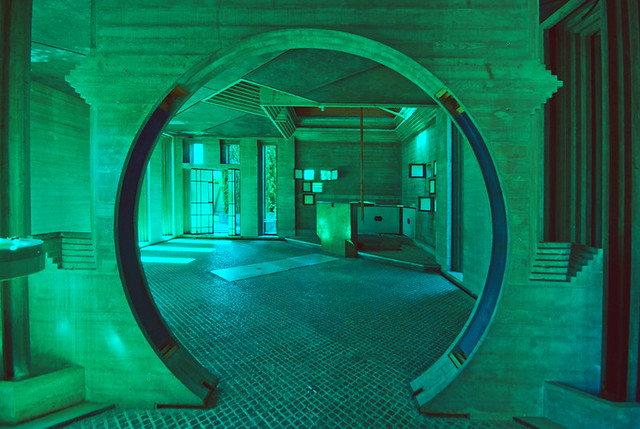
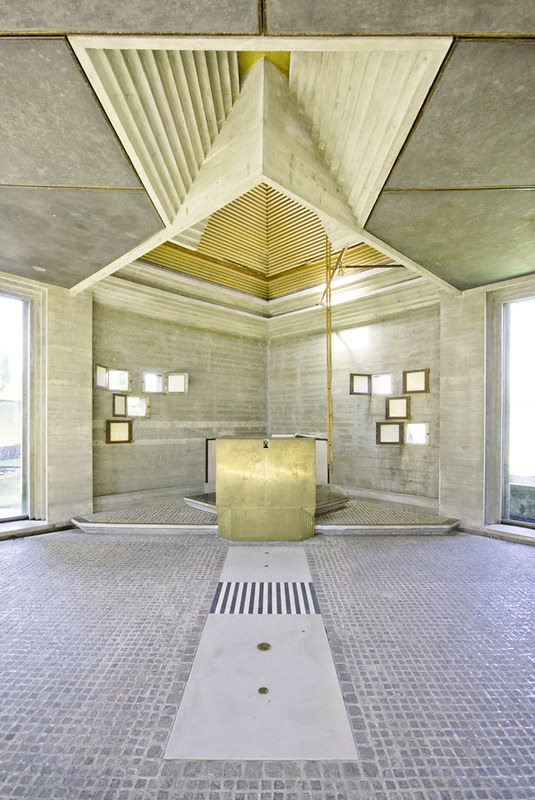
Here are some photos of Brion Cemetery (1972) in San Vito d'Altivole, Italy, by Carlo Scarpa, photographed by Francesco Maria Gabriele Vozza.

Carlo Scarpa - Tomba Brion

Carlo Scarpa - Tomba Brion

Carlo Scarpa - Tomba Brion

Carlo Scarpa - Tomba Brion

Carlo Scarpa - Tomba Brion

Carlo Scarpa - Tomba Brion

Carlo Scarpa - Tomba Brion

To contribute your Flickr images for consideration, just:
:: Join and add photos to the archidose pool
To contribute your Instagram images for consideration, just:
:: Tag your photos #archidose

Monday, August 25, 2014

Book Briefs #19: University of Minnesota Press

"Book Briefs" are an ongoing series of posts with short first-hand descriptions of some of the numerous books that make their way into my library. These briefs are not full-blown reviews, but they are a way to share more books worthy of attention than can find their way into reviews on my daily or weekly pages. In this post are six titles published by the University of Minnesota Press.


1: Architecture since 1400 by Kathleen James-Chakraborty | 2013 | Amazon
Instead of the traditional discussion of style and analysis of space, the author aims "to reconstruct the story of how environments are created that shape experience and communicate identity through the ways in which spaces are formed and surfaces are decorated." The examples in the book, which moves chronologically and geographically from front to back (starting in China in the early 1400s and ending in the same country in present day), are diverse in terms of place (Asia and South America are afforded as much importance as Europe and North America, though Africa is the focus of only one of the thirty chapters) and architect/builder (encompassing more buildings than those designed by well known architects), making it an atypical history of architecture when compared to Sir Banister Fletcher, Trachtenberg and Hyman, and other standard textbook histories. The bite-sized chapters – thirty of them across 488 pages, or an average of 16 illustrated pages per chapter – make the book a handy reference when students and architects want to get a different perspective on buildings in a particular place and time. Further, references at the end of each chapter give the reader good places to go for more depth than what James-Chakraborty's book allows.

2: City Choreographer: Lawrence Halprin in Urban Renewal America by Alison Bick Hirsch | 2014 | Amazon
I've never been a fan of the phrase, "You can't judge a book by it's cover." Sure, you can't pass judgment on a book entirely based on its cover, but there are certain telling things that covers convey, particularly some architecture books. This book's cover has two illustrations: a photo of activity in Cascade Fountain in Seattle's Freeway Park designed by Lawrence Halprin, and a score by Halprin for a performance, most likely for his wife Anna. These two images, as the title of the book hints, have a strong relationship, as the design of Halprin's public spaces, like Freeway Park, were informed by a creative process called the RSVP Cyles (Resources, Score, Valuation, Performance) that Halprin developed in the 1960s. Hirsch, in a book based on her doctoral dissertation at the University of Pennsylvania, analyzes Halprin's methods for designing public spaces with people's actions in mind, an approach that designers should pay attention to today.

3: The Folklore of the Freeway: Race and Revolt in the Modernist City by Eric Avila | 2014 | Amazon
"When the interstate highway program connected America's cities, it also divided them, cutting through and destroying countless communities." So says the back-cover description of this book, which brings to mind the way the Dan Ryan Expressway on Chicago's South Side separated the former Robert Taylor Homes from the neighborhood of Bridgeport, the home of Richard J. Daley, the Mayor of Chicago when both the expressway and public housing were constructed in the 1960s. In this case the expressway didn't destroy Bridgeport (as planned it would have, but it was rerouted eight blocks to the east) but it severed the white and black neighborhoods from each other. This particular example is not part of Avila's book, since the associate professor of history, Chicano studies, and urban planning at UCLA focuses on Los Angeles, New Orleans, New York, and other cities where people have protested the damage wrought by highways.


4: Mechanization Takes Command: A Contribution to Anonymous History by Sigfried Giedeon | 2013 | Amazon
Sigfried Giedion wrote one of the most influential books on architecture last century, Space, Time and Architecture, released in 1941 and now in its fifth edition. If one masterpiece in his lifetime was not enough, Giedion also wrote this masterful volume seven years later on the "anonymous history" of mechanization taking hold of just about every aspect of our lives. Having covered architecture in the earlier book, here he tracks the changes in the food we eat, the chairs we sit on, the rooms we bathe in, and even the locks that secure our homes. As much a product of its time as Space, Time and Architecture, Mechanization Takes Command is, as Stanislaus von Moos states in the postscript to the 2013 printing of the 1948 book, equal parts "factographic" historical account and manifesto. I prefer to read it in the former sense, since the balance of textual and visual evidence paints a clear picture of technology's advance, even as the unbiased nature of Giedion's writing comes through from time to time. It does make me wonder if a similar "anonymous history" could be done on the computer age, on the influence of the digital in similar areas of our life. Perhaps somebody's done that and I'm not aware; if not, Giedion's reprinted book is a wake-up call for somebody to dive in.

5: The Modern Architectural Landscape by Caroline Constant | 2012 | Amazon
In the sphere of modernity, there's an inclination to partition work and expression into disciplines. Buildings are the purview of architects, for example, and the land around a building is taken care of by the landscape architect. Such a distinction is prevalent today, but this book's analysis of nine landscapes designed by architects puts a wrinkle in this partitioning by focusing on the totalizing nature of modernism to create cohesive environments, buildings and landscapes combined. Inside are the Barcelona Pavilion and Lafayette Park, both the product of Mies van der Rohe, the Woodland Cemetery of Asplund and Lewerentz, Jože Plečnik's Prague Castle, Le Corbusier's Chandigarh, and OMA's unbuilt Parc de la Villette submission, among others.

6: Pedestrian Modern: Shopping and American Architecture, 1925–1956 by David Smiley | 2013 | Amazon
Southdale Center, designed by Victor Gruen and known as the first fully enclosed, climate-controlled shopping mall in the United States, opened in Edina, Minnesota, in 1956. Gruen and his influence on the shopping mall and the suburbs after World War II is well documented, but what about the architecture of shopping centers pre-Southdale? Such is the subject of Columbia University professor David Smiley's thorough and thoroughly illustrated book, which tackles the years 1925 to 1956. The history is told in six chapters that are thematic rather than chronological, with "Park and Shop" in chapter three and "The Language of Modern Shopping" in chapter six, for example. The previous ignorance of early 20th-century shopping centers from architectural study is hinted in the title, as "pedestrian" refers not only to shoppers on foot (and the environments architects created for them) but also to the relegation of shopping centers to "secondary, pedestrian status" as the back cover attests. This book shows that the latter is far from the truth, and shopping centers are as much about modern architecture as housing, office buildings, and other traditional building types of interest.

Friday, August 22, 2014

Today's archidose #778

Here are some photos of Råå Day Care Center (2013) in Helsingborg, Sweden, by Dorte Mandrup Arkitekter, photographed by Matthew Gribben.


To contribute your Flickr images for consideration, just:
:: Join and add photos to the archidose pool
To contribute your Instagram images for consideration, just:
:: Tag your photos #archidose

Thursday, August 21, 2014

Manhattan Classic, New York's Finest Prewar Apartments

I was very excited to recently receive a copy of Princeton Architectural Press's new book "Manhattan Classic" by Geoffrey Lynch, pictured below, (from the firm H3 Hardy Collaboration Architecture) which features the best 'Prewar' apartment buildings in NYC.
This well organized book starts with a map of NYC which shows the location of the buildings covered. Each chapter then features an exemplary floorplan of the prime unit in each building as well as photos of additional apartments.  In many ways it reminds me a lot of Washingon, DC's version of this (our real estate bible!) Best Addresses by James Goode (another book I can't recommend more highly!)
For architectural floorplan lovers like me you won't be able to put this book down - pure floorplan porn with over 84 apartments featured!
Some of the images you may recognize such as this apartment from 998 Fifth Avenue but it's interesting to see them placed within their buildings and area of the city -putting a name to the face so to speak. I love this dining room above and the staircase located within the same duplex apartment, seen below, is even more stunning!
Some people may sneer at apartment living as 'small' but this book proves that the dwellers of these apartments aren't missing out on anything from a single family home!  Pick up your own copy of the book today and settle down with a glass of wine to study the floorplans; I promise you won't regret it!!

Powers of Quarantine

[Image: Liberian security forces implement "a quarantine of the West Point slum, stepping up the government’s fight to stop the outbreak and unnerving residents." Photo by Abbas Dulleh/AP, via Al Jazeera America].

Of Forcible Blockades and Military Isolation

A neighborhood-scale quarantine was forcibly imposed on the slums of Monrovia, Liberia, yesterday to help prevent the spread of Ebola.

Using makeshift roadblocks—consisting, for the most part, of old furniture, wooden pallets, and barbed wire, as everyday objects were transformed into the raw materials of a police blockade—authorities have forcibly isolated the densely populated neighborhood of West Point from the rest of the city.

Unsurprisingly, however, poor communication, over-aggressive law enforcement tactics, and general misinformation about the nature—even the very existence—of Ebola has led to local resistance.

Al Jazeera reports, for example, that "police in the Liberian capital have fired live rounds and tear gas to disperse a stone-throwing crowd trying to break an Ebola quarantine imposed on their neighborhood." But they were perhaps simply trying to defend themselves against a badly communicated onslaught of police wielding batons and machine guns, and they would be doing so whether Ebola was in the picture or not.

[Image: Neigborhood-scale quarantine; photo by Abbas Dulleh/AP, via Al Jazeera America].

Ubiquitous Quarantine

But this is only one of the most recent—and one of the more extreme—examples of the spatial practice of quarantine reappearing in the news in recent weeks. At the end of July, for example, the Chinese city of Yumen was partially quarantined due to an outbreak of bubonic plague, as parts of the city were "sealed off" from the neighborhoods around them; and the ongoing Ebola outbreak has led to involuntary quarantines being implemented at nearly every spatial level, from the individual to the city to entire international regions.

In the latter case, recall that just last week a cordon sanitaire was enforced in the international border regions of Guinea, Liberia, and Sierra Leone to stop people possibly infected with Ebola from crossing the borders. As the New York Times described this action, "The Ebola outbreak in West Africa is so out of control that governments there have revived a disease-fighting tactic not used in nearly a century: the 'cordon sanitaire,' in which a line is drawn around the infected area and no one is allowed out."

This spatial technique for managing the spread of microbiological life has "the potential to become brutal and inhumane," the paper adds. "Centuries ago, in their most extreme form, everyone within the boundaries was left to die or survive, until the outbreak ended."

[Image: Enforcing quarantine; Photo by Abbas Dulleh/AP, via Al Jazeera America].

Resisting Quarantine

Yet resistance to quarantine is nearly as ubiquitous as attempts to implement it. The very notion of involuntary quarantine is important to emphasize here: this is something that must be spatially imposed on people who have not chosen to bring this condition upon themselves.

Read this dramatic description from the Times, for example, depicting the moment at which involuntary government quarantine is revealed:
Soldiers and police officers in riot gear blocked the roads. Even the waterfront was cordoned off, with the coast guard stopping residents from setting out in canoes. The entire neighborhood, a sprawling slum with tens of thousands of people, awoke Wednesday morning to find that it was under strict quarantine in the government’s halting fight against Ebola.

The reaction was swift and violent. Angry young men hurled rocks and stormed barbed-wire barricades, trying to break out. Soldiers repelled the surging crowd with live rounds, driving back hundreds of young men.
Involuntary quarantine can inspire this type of reaction at any scale. Consider the panic-stricken family who forcibly raided a hospital in Freetown, Sierra Leone, in order to free an Ebola-stricken relative who, they had come to believe, was being held against her will; she later died, but not before passing her infection on to others. Or consider the Nigerian nurse possibly exposed to Ebola while caring for patients who nonetheless "skipped quarantine," either out of a desperate sense of self-preservation or due to sheer ignorance of the dangers of her actions.

"Don't Touch The Walls!"

Somewhat incredibly, though, the deliberate breaking of quarantine can also occur not out of survivalist panic or concern for one's own medical safety, but simply for the purpose of looting. Some of the descriptions here are jaw-dropping, with raiders actually breaking into Ebola wards to steal "property like tents, tarpaulins, buckets, hospital beds, mobile phones and shoes among other things," literally all of which could bear traces of Ebola and thus spread the contagion elsewhere.

The New York Times had a particularly chilling example of why not to steal from Ebola wards when it ran this haunting sentence two weeks ago: "'Don’t touch the walls!' a Western medical technician yelled out. 'Totally infected.'"

Yet, even in the West Point quarantine zone, misguided acts of theft are rampant: "Residents stormed through" the quarantine zone, we read, also in the New York Times, "running off with a generator and supplies like mattresses, some soaked with the blood of patients who were believed to have Ebola. "

Yet, in a situation where even the hospitals are considered to be "death traps," where the walls themselves are "totally infected" with Ebola, the designation of involuntary and militarily enforced quarantine boundaries is taken to mean the designation of a kind of urban sacrifice zone, a place where patients can be fatally off-loaded and the disease tragically but successfully contained. From this point of view, getting out of the quarantine zone becomes a top priority.

Residents of West Point have even protested that "their community, they believed, was becoming a dumping ground for Ebola patients," and that quarantine was simply a spatial excuse for putting victims all in one place, uninfected neighbors be damned. "In all," we read, "residents tried to break through the barricade three times on Wednesday, Col. Prince Johnson, the army’s brigade commander, said Wednesday evening by phone. His soldiers had fired in the air, he said, but he would not comment on whether they had also fired into the crowd."

[Image: A "quarantine house" in Pennsylvania; courtesy of the U.S. Library of Congress].

Powers of Quarantine

Who has the power to quarantine? Where does this power come from—especially in a Constitutional democracy like the United States—and where exactly are this power's limits? Does it have any?

Nicola Twilley and I explored these questions last week for the New Yorker, looking at, among other things, the Constitutional implications of quarantine powers. As we point out in that piece, there is an ethically troubling overlap between the notion of the quarantined subject, spatially isolated often against his or her will, and the liminal figure of the "enemy combatant" who potentially never faces the prospect of a legal trial whilst being indefinitely detained.

In both cases, extrajudicial detention can occur on the ground of suspicion alone—presumed guilt or infection—rather than legal or medical certainty.

In fact, writing as a coauthor on two Congressional Research Reports from 2005, legal theorist Jennifer Elsea commented on both of these categories: of the combatant held by the state without rights or legal access to resistance, and the medical subject unable to protest his or her segregation due to being held in a state of involuntary quarantine.

As we see massive international quarantine zones enforced at gunpoint throughout West Africa, and as suspected Ebola cases pop up everywhere from Johannesburg to California, it is well worth discussing where these spatial powers come from, who controls them, and when and where quarantine has reached its limit.

The Return of Quarantine

Indeed, as Twilley and I suggested back in 2010 during the "Landscapes of Quarantine" design studio and exhibition at New York's Storefront for Art and Architecture, quarantine is a decidedly pre-modern spatial practice that is nonetheless experiencing a contemporary comeback.

Confronted with widespread antibiotic resistance and increased global air travel that can bring diseases like Ebola to every global metropolis in a matter of hours, quarantine is part of "a 14th-century toolbox" that ironically looks perfectly at home in the 21st century.

[Image: Quarantine station, Pennsylvania; courtesy of the U.S. Library of Congress].

Given all these examples of resistance, confusion, and the violence often necessary to impose spatial isolation on people only suspected of bearing a disease, we suggest in the New Yorker essay that quarantine becomes something of a spatial fiction, always and permanently on the verge of collapse. Its premise is a fantasy; the imaginary boundaries it seeks to defend are legally loose and physically porous.

Nonetheless, for all its apparent instability, quarantine offers a necessary fiction of separation and control at a time when the boundaries between health and contagion have become so vertiginous and blurred.

(Note: Parts of this post were co-written with Nicola Twilley).
Today's archidose, now with Instagram

Since starting the "Today's archidose" feature in 2006, when I asked readers to contribute photos of contemporary via Flickr for consideration on this blog, I've done 777 posts. Given that Flickr isn't the primary means for people to share photos online, I've decided (somewhat well after the fact) to open the Today's archidose feature to Instagram.

It basically works the same way as the Flickr instructions, but instead of joining a group, just tag your Instagram photos #archidose (I'd link to the tag here, but Instagram only allows clicking on tags that through their app) and I'll dig through them as I consider what to post. It helps that a number of proactive Instagram users have already been using the #archidose tag.

To start, here is one of my photos, of SOM's One World Trade Center as seen from West Street:


To contribute your Flickr images for consideration, just:
:: Join and add photos to the archidose pool
To contribute your Instagram images for consideration, just:

:: Tag your photos #archidose